
La Galigo Liveaboard
Duration
7-8 Nights
Location/Type
Indonesia/Liveaboard
Cabins
7 Cabins
Departure
Sorong
ABOUT THE LIVEABOARD
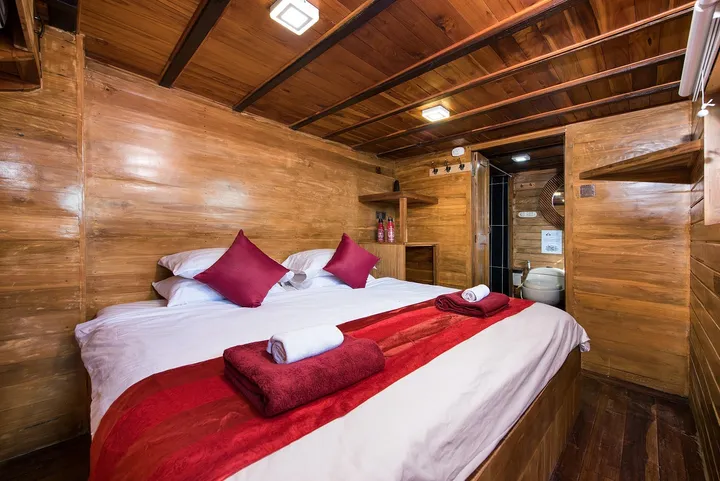
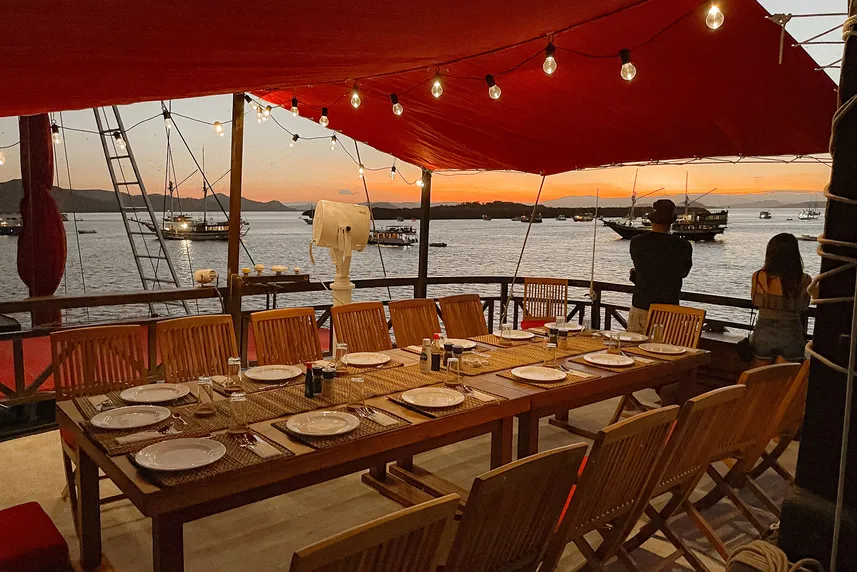
The 33m La Galigo liveaboard in Indonesia is a traditional two-mast Phinisi sailing boat built in 2012. It was designed by an avid diver and built by traditional Sulawesi craftsmen with scuba diving in mind. The La Galigo has 7 en-suite cabins with privately controlled air-conditioning accommodating 14 guests. The suite cabin has a private balcony and a TV. The living and dining area has a large TV, a well-stocked bookcase, and many power sockets for charging laptops, cameras, and video equipment. Guests can soak up some sun on a lounge, relax in the shade, or read a book in the rooftop dining and relaxing area. An isolated engine room makes the motor and generator noises very low. Tasty meals are provided throughout the day. Vegan and vegetarian options are also available. For relaxation, there are also outdoor common areas where guests can lounge in reclining chairs, enjoying the ocean breeze. Guests of the liveaboard frequently rate the La Galigo as the best crew experience. Fun and safety are the hallmarks of La Galigo Liveaboard.
La Galigo has a dedicated diving platform at the rear of the boat and a side ladder for loading. There are also two dive tenders, one 6m and one 9m available. The itinerary includes trekking on all different itineraries to places such as the outlook of Penemu and cruising through the limestone formations of Wayag Lagoon and viewpoint. When scuba diving in Raja Ampat, sharks are everywhere under the reefs. The itinerary includes trekking the outlook of Bintang Lagoon and cruising through the limestone formations of Mt. Pindito. Scuba diving in Raja Ampat, where sharks can be found under the reefs. There are some great dive sites around Gam Island with vibrant fish-covered reefs and plenty of macro subjects. The biodiversity is rich, and guests can find Manta Rays, Whale sharks, Wunderpus, Mimic Octopus, Ribbon Eels, Napoleon Maori Wrasse, Bump Head Parrot Fish, Eagle Rays, Pygmy Seahorse, Great Barracuda, Silver Tip Sharks, Bull Sharks, Walking Bamboo Sharks, Ornate Ghost Pipefish, Frog Fish, Batfish, Potato Grouper, HammerHead Sharks, Grey Reef Shark, Large schools of Pelagic Fish, Nudibranchs, and Turtles.
Book today for the experience of a lifetime aboard this stunning wooden liveaboard!
Cabin Price Starts at
$ 360
Book your spot!
"I wanted freedom, open air, and adventure. I found it on the sea."
- Alain Gerbault
Itinerary
Know More about the days
7 Nights
Day 1: Embark - Cruise Sorong To Waisai Area
- Day one starts with your pickup from either your hotel or the airport. If we are picking you up from your hotel, it is generally around 07:30 – 08:00, if you are arriving on the day of departure, your arrival time must be before 07:30. We will then head directly to Sorong Port, where you will be taken to the vessel. Once onboard you will be met by the Cruise
- Director and a welcome drink. After you have been shown to your rooms and unpacked your luggage, it is time for a welcome briefing before we have some lunch, you have some time to relax and soak up the amazing surroundings en route to our clearance point, and then onwards to our first dive of the trip.
- Our ‘welcome diveʼ is usually conducted at the nearby island of Saonek Kecil. The waters are generally calm and are a perfect spot to get the diving going. After the checkout dive, you can get nice and comfortable in your new surroundings and get excited about the first full day of diving tomorrow.
Day 2: Dampier Strait - Kri Area
- While in the central Dampier Strait, we will conduct 4 dives. This is what we typically aim for in a day throughout the trip, although some days are a little different as the number of dives may be reduced by doing a land tour or having to do a large crossing from one region to another (Raja Ampat is a big place!). The typical schedule is morning dive, breakfast, mid-morning dive, lunch, afternoon dive, afternoon snack, night dive, and dinner…. DIVE, EAT, SLEEP, REPEAT!
- The top dive sites in this area are Blue Magic, home to majestic Oceanic Manta Rays, and other large pelagicʼs such as Spanish Mackerel and Bigeye Trevally. Chicken Reef, an amazing dive site filled with fish of all varieties and amazing colorful corals will dazzle you next. Cape Kri, arguably the top house reef in the world, was made famous by Raja Ampat pioneer Max Ammer and is next on the itinerary. And to top off this (fish) action-packed day, we will take you for a night dive on Kriʼs south coast, in Yenbuba Villageʼs Jetty after you soak in the stunning sunset views with the islands of Waigeo and Gam in the distant, fiery horizon.
Day 3: Pianemo (A.k.a. Penemu)
- Melissaʼs Garden Dive Site is undoubtedly the top dive in this area, with a staggering number of coral and fish species packed into this small piece of marine real estate. It gets its name from an amazing hard coral garden situated on a reef between 3 small islands. Its beauty needs to be seen to be believed. Another one of the places we may visit today is the Keruo Channel Dive Site. A great gentle drift dive down a mini wall and slope on the edge of Keru Island. One of the other favorites we often visit in this area is the Batu Rufus Dive Site. This dramatic dive site has a 40m plus drop-off wall to the blue. Amazing views when you sit at 20 meters depth and look up and down at the stark landscape you are floating between. The iconic limestone pinnacles have become as much a part of the Raja Ampat experience as the diving has, and Pianemo lagoon/lookout is just one of many such stunning formations. The best time to hike this hill is late afternoon when the temperature has dropped and the lighting starts to turn golden, but the rewards for climbing are well worth it.
Day 4: Wayag
- Awake bright and early to witness sunrise on the equator, cruising between the limestone formations that make up the island of Wayag, in preparation for the morning hike. These limestone islands and pinnacles have become synonymous with Raja Ampat and the bay is also home to the worldʼs first confirmed Manta breeding nursery. The best time to hike this hill is early morning before temperatures rise, but the rewards for climbing are well worth it. The beaches here are also pristine, with fine white sand and turquoise waters surrounding the limestone cliffs of the islands. After trekking, we will endeavor to dive to Wayag Corner if the conditions are right, this site is a manta cleaning station so fingers crossed they are in getting a spa treatment and we get to see them.
- We will stick around the same area at the western end of the lagoon where we plan to dive another great dive site, which will be dependent on the conditions of the day, it could be Ridge Rock, Two Hump Rock, or Figure 8 Rock, there is quite a few Mantas around this area so we will try to choose whichever site has had the most manta action at the time of your trip. While you have lunch, the boat will cruise to the eastern side of Wayag. After lunch, we take a short trip to the Wayag Ranger Station, which is also a Black Tip Reef Shark breeding area. Here we will get the chance to chill out on the beach with these baby sharks in the shallows under the ranger jetty. If conditions are right we will conduct a night dive around the Eastern Wayag area too.
Day 5: Kawe & Alyui Bay
- Kawe is an island located exactly on the equator and is one of our favorite islands to dive in north of Raja Ampat. Dive sites visited here are very heavily dependent on day-to-day unpredictable conditions such as swell, but one of our favorite sites in the area is a very colorful coral reef (somewhat ironically) known as Black Rock. Eagle Rock (which comprises 3 separate dive sites) is well known for its Pygmy Seahorse as well as its Manta populations, and we will dive these sites late morning and early afternoon. Around 4 pm, La Galigo will move into Alyui Bay, one of the worldʼs most spectacular bays to watch the sunset, and also do some great muck diving at arguably the best night dive site in all of Raja Ampat, the Cendana Pearl Farm Jetty.
Day 6: Gam & Western Dampier Strait
- We wake up just off the coast in Gam Island. There are some great dive sites around this area with vibrant fish-covered reefs and plenty of stunning macro subjects. Two sites we regularly visit in Gam are Citrus Ridge and Mayhem. As we have lunch we will cruise down to the Western Dampier Strait, after lunch, we take a land tour of the peaceful Arborek Island. The village itself is tranquil and surrounded by beautiful beaches. Our 3rd dive of the day will also be here at a dive site named Manta Ridge, for an opportunity to dive with the Manta Ray population often located here. We will then take off to the southern coast of Mansuar Island. A night dive will take place here called Sawandarek Jetty, this is where you will probably feel like you are in an aquarium - only the fish are incredibly numerous, wild, and free. We anchor here for the night before heading to the eastern end of the Dampier Strait for our final dive and a special land tour tomorrow.
Day 7: Eastern Dampier Strait - Kalibiru
- We will be making our way along the Dampier Strait, and this is a great opportunity to dive into Mikeʼs Point. Legend has it that it was mistaken for a battleship during WWII, and was heavily bombed by enemy aircraft. It has a stunning overhang, as well as gentle-swim throughs in addition to its magnificent coral reef. We will then take you on a land trip to one of Raja Ampatʼs hidden natural wonders, Kalibiru, a river with cool, clear blue fresh waters surrounded by lush tropical jungle. A wondrous sight to take in, it also makes a great spot for a swim in an unspoiled, remote plot of paradise. After an incredible trip, our crew will make sure you are comfortable, while they prepare a night of food, song, and dance to party the night away with for your last night in pristine Raja Ampat before we set sail for Sorong.
Day 8: Disembark In Sorong
- La Galigo will be anchored up in the morning around 5:00 A.M. in Sorong, in preparation for you to catch your flight, or check in to your hotel. Guests are welcome to stay onboard until 11:00 A.M., and our staff will assist you with transportation to your desired location. After breakfast, guests may also take the time to exchange photos and swap contact details to keep in touch with new friends and dive buddies!
- Marine Life: At least 75 percent of all coral species can be found in Raja Ampat, divers can expect a range of topography from soft corals and sea fans, to hard corals, seagrass beds, mangroves, shallow reefs, deep drop-offs, caves, black sand, and white sand. Giant manta rays, sea turtles, sharks, cuttlefish, pipefish, various seahorse species, and massive schools of reef fish are the norm, plus the delightful wobbegong sharks and Epaulette sharks inhabit these waters too.
- The last dive will be on the penultimate day of the trip. Divers are recommended to wait for 24 hours before flying after the last dive.
8 Nights
Day 1: Sorong to Waisai
- Day one starts with your pickup from either your hotel or the airport. If we are picking you up from your hotel, it is generally around 07:30 – 08:00 am, if you are arriving on the day of departure, it is important that your arrival time is before 07:30 am. We will then head directly to Sorong Port, where you will be taken to the vessel.
- Once onboard you will be met by the Cruise Director and a welcome drink. After you have been shown to your rooms and unpacked your luggage, itʼs time for a welcome briefing before we have some lunch. You have some time to relax and soak up the amazing surroundings en route to our clearance point, and then onwards to our first dive of the trip.
- Our ‘welcome diveʼ is usually conducted at the nearby island of Saonek Kecil. The waters are generally calm, and it is a perfect spot to get the diving going. After the checkout dive, you can get nice and comfortable in your new surroundings and get excited about the first full day of diving tomorrow.
Day 2: Dampier Strait
Whilst in the central Dampier Strait we will conduct 4 dives. This is what we typically aim for in a day throughout the trip, although some days are a little different as the number of dives may be reduced by doing a land tour or having to do a large crossing from one region to another (Raja Ampat is a big place!). The typical schedule is morning dive, breakfast, mid-morning dive, lunch, afternoon dive, afternoon snack, night dive, and dinner…. DIVE, EAT, SLEEP REPEAT! One of the top dive sites in this area is Blue Magic dive site, home to majestic oceanic manta rays, and other large pelagics such as Spanish mackerel and bigeye trevally. Next up is one of the Dampier Straitʼs highlights, we will head to the nearby island of Mioskon dive site, to dive into its spectacularly colourful reef with an assortment of large bommies encrusted with hard and soft corals.
Next up, Cape Kri Dive Site, arguably the top house reef in the world, was made famous by Raja Ampat pioneer Max Ammer. A booming current-driven site where you can see pelagics hunt as you float leisurely nestled in the reef above on a reef hook. The other dive site we will be visiting tonight is a dive on Kri Islandʼs south coast, in Yenbuba Villageʼs Jetty dive site. An amazing array of fish has populated this area both under the jetty pylons as well as amongst the hard coral garden that protrudes down the slope past it. This will be our anchor point for the night as you soak in the stunning sunset views with the islands of Waigeo and Gam in the distant, fiery horizon.
Day 3: Pianemo (a.k.a. Penemu)
Melissaʼs Garden Dive Site is undoubtedly the top dive in this area, with a staggering number of coral and fish species packed into this small piece of marine real estate. It gets its name from an amazing hard coral garden situated on a reef between 3 small islands. Its beauty needs to be seen to be believed. Another one of the places we may visit today is the Keruo Channel dive site. A great gentle drift dive down a mini wall and slope on the edge of Keru Island. One of the other favourites we often visit in this area is the Batu Rufus dive site. This dramatic dive site has a 40m plus drop-off wall to the blue. Amazing views when you sit at 20 metres depth and look up and down at the stark landscape you are floating between.
The iconic limestone pinnacles have become as much a part of the Raja Ampat experience as the diving has, and Pianemo lagoon/lookout is just one of many such stunning formations. The best time to hike this hill is late afternoon when the temperature has dropped and the lighting starts to turn golden, but the rewards for climbing are well worth it.
Day 4: Batanta
- On day 4 we will head to a lesser-known corner of Raja Ampat, an area known as Dayang, at the western end of Batanta island. The Dayang dive site takes place over a shallow, sandy reef which is actually a magnet for manta rays, which come to this area to feed as well as conduct routine visits to their “cleaning stations” or “manta spa” (ask our Cruise Director to tell you about this fascinating aspect of their behaviour). This is still a bit of a new area for diving itineraries in Raja Ampat as this cleaning station was only discovered a few years ago so for those coming back for a second round at Raja Ampat this may be new.In the afternoon as you relax, we will set sail for the southern islands of Raja Ampat, the biggest crossing of the trip will have you waking up tomorrow morning in Misool.
Day 5: Wayil, Misool
- Misool is a huge island, with an overwhelming multitude of smaller, satellite island clusters. There are in fact numerous “regions” within this area itself. If being surrounded by limestone pinnacles does not instil in you a sense of awe, doing a night dive amongst these towering peaks surely will! Today we will show you the dive sites around Wayil, where you will undoubtedly experience the feeling of being far, far away from the rest of civilization An outstanding selection of dive sites are located fairly close to each other in Wayil, one of which is the blockbuster Four Kings dive site, a group of towering pinnacles which are almost too large to circumnavigate in a single dive, which also happens to attract giant oceanic manta rays. Giant trevally, Napoleon wrasse, and large snapper are all often found here.
- Another favourite we will dive into is Barracuda Rock dive site, a pinnacle with an unusual underwater cavern, which is also home to a patrolling tribe of schooling barracuda. Neptuneʼs Sea Fan dive site is another great spot we regularly visit here; it gets its name from the vast number of gorgonian sea fans on the site.
Day 6: Fiabacet, Misool
- One of our dives today is at the iconic Boo Window dive site. Unique in topography, the reef has window-like swim-throughs and a great chance for some wide-angle photos. Secret: the sea fans here often conceal pygmy seahorses! Anchovy dive site is an explosive dive site where you can see schools of mobula rays dart in amongst schools of anchovies, scattering them for just long enough for you to have a window through the reef to the circling mantas feeding on the other side. Nudi Rock dive site is also included in todayʼs itinerary, an iconic south Raja Ampat site with a rock on the surface that is an uncanny resemblance to a nudibranch, and amazing colours of coral and abundant marine life in the current swept depth below the surface.
Day 7: Warakaraket, Misool
- The diving in this part of Misool is filled with the pristine coral life in the heart of Misool and giant manta rays, close to the Eco Resort. Whale Rock dive site and Tank Rock dive site are both abundant in beautiful soft coral and schools of fish, and conditions and logistics with Misool Eco Resort will decide which of the sites are dived. Weather permitting due to its open ocean location, we will dive Shadow Reef dive site (a.k.a. Karang Bayangan/Magic Mountain), undoubtedly the blockbuster dive site in this remote corner of Raja Ampat, located in the unprotected southern waters of Misool. You can often find huge manta rays gliding across this incredibly ‘hard to beatʼ dive site.
Day 8: Daram
- On the penultimate day of the trip, we will start at Andiamo dive site. Another spectacular site to end your southern Raja Ampat journey. Here you will see pygmy seahorses, hunting giant trevallies, and barracuda galore. The final dive of your trip will conclude at Warna Berwarna dive site, you can expect lots of sea fans, schooling fusiliers, and bumphead parrotfish. Our journey to Sorong may take around 18 hours depending on currents and prevailing weather conditions. But after an incredible trip, our crew will make sure you're comfortable while they prepare a night of food, song, and dance to party the night away with you while we set sail for Sorong.
Day 9: Disembark in Sorong
- La Galigo will be anchored up in the morning around 5:00 A.M. in Sorong, in preparation for you to catch your flight, or check in to your hotel. Guests are welcome to stay onboard until 11:00 A.M., and our staff will assist you with transportation to your desired location. After breakfast, guests may also take the time to exchange photos and swap contact details to keep in touch with new friends and dive buddies!
- Sample itineraries are for guidance only. Actual itineraries may differ slightly due to factors such as weather, wildlife, logistics and local regulations.
- Full board accommodation includes breakfast, lunch, dinner and snacks
- Transfer from/to the airport (round-trip, only on boat arrival & departure days)
- Weight Belt/Weights/Tank(s)
- Transfer from/to local hotels (round-trip, only on boat arrival & departure days)
- Dive guides
- Fins, mask, snorkel (ABC)
- Dive computer
- Current hook
- SMB (Surface Marker Buoy)
- Island tours
- To be paid with your booking
- None
- Payable on board
- Marine park fees, local area access fees, harbour fees, anchorage fees and required land-based activity donations: USD 225 (per trip)
- Fuel surcharges ( may fluctuate with markets, you may be asked to pay an extra fuel allowance of up to 30 days before departure ).: 20 USD Approx, to be confirmed (per day/person)
Take a look around
Cabins






JOIN OUR NEWSLETTER AND GET $100 credit
Frequently Asked Questions
Which airport should I fly into?
Can non-divers join?
Lorem ipsum dolor sit amet, consectetur adipiscing elit. Ut elit tellus, luctus nec ullamcorper mattis, pulvinar dapibus leo.
What kind of food is served?
Lorem ipsum dolor sit amet, consectetur adipiscing elit. Ut elit tellus, luctus nec ullamcorper mattis, pulvinar dapibus leo.
What payment methods are acceptable on board Hondius?
Lorem ipsum dolor sit amet, consectetur adipiscing elit. Ut elit tellus, luctus nec ullamcorper mattis, pulvinar dapibus leo.
What safety equipment is on board?
Lorem ipsum dolor sit amet, consectetur adipiscing elit. Ut elit tellus, luctus nec ullamcorper mattis, pulvinar dapibus leo.
What kinds of animals can we see?
Lorem ipsum dolor sit amet, consectetur adipiscing elit. Ut elit tellus, luctus nec ullamcorper mattis, pulvinar dapibus leo.
What type of outlets are on the ship?
Lorem ipsum dolor sit amet, consectetur adipiscing elit. Ut elit tellus, luctus nec ullamcorper mattis, pulvinar dapibus leo.
Is there WiFi?
Lorem ipsum dolor sit amet, consectetur adipiscing elit. Ut elit tellus, luctus nec ullamcorper mattis, pulvinar dapibus leo.
When does the boat embark/disembark?
Lorem ipsum dolor sit amet, consectetur adipiscing elit. Ut elit tellus, luctus nec ullamcorper mattis, pulvinar dapibus leo.